I Built a Parking Simulator to Avoid Marking, and Learned Why You Can’t “Reverse Engineer” Spaghetti
How I trusted AI with my coding, and it betrayed me with complexity
Watch the game play
The Premise
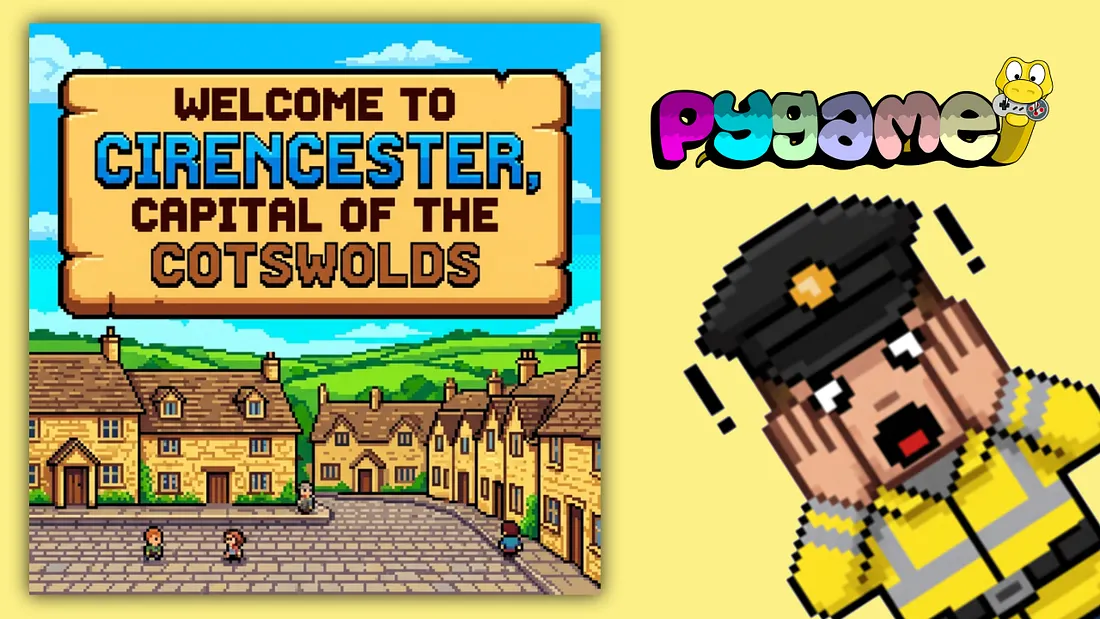
There are two universal truths in Cirencester. One: if you leave your house, you will see someone you know, and you will be forced into a polite conversation about the weather. Two: you will struggle to find a free parking space.
It was in this spirit of localised frustration that I decided to build Traffic Warden Roulette — a Pygame project involving Rupert (who is definitely not me) and his grey Peugeot 308SW estate car, a “Risk It” button, and the crushing social anxiety of illegally parking outside a charity shop.
You play as a harried family man running errands like “Buy Wine for Clementine” or hiding assets at “St Michael’s Hoard Management.” For every spot, you have a choice: pay the £2.50 fee, or press space to risk it.
But while the game itself is a simulator of sheer audacity, the project became a simulator of something else entirely: a pedagogical disaster.
The Hypothesis: “Reverse Documentation”
As a Computer Science teacher, I spend my life telling students: “Plan first. Then code.”
But with an AI assistant that could generate code at the speed of thought, I decided to test a new theory. I called it “Reverse Documentation.”
The plan was elegant:
- 1. Just Build It:Use AI to rapidly prototype the “Final Version” of the game with all the bells and whistles — databases, animated backgrounds, pathfinding.
- 2. Strip It Back:Once it worked, I would comment out features one by one until I had a bare-bones loop.
- 3. Excavate:I would then uncomment each feature effectively “re-discovering” the code to write the tutorial.
I thought it would be efficient. I thought it would be a clever way to generate a learning resource.
I was wrong. But before the fall, there was the glorious ascent…
Building the Chaos (The Fun Part)
The game itself became a monument to my own parking anxiety. This isn’t just a generic simulator; it’s a hyper-specific parody of life in the Cotswolds, built by me and my tireless yes-man made of code.
The Missions: You aren’t just driving around aimlessly. You are Rupert, a man on the edge, running errands that oscillate between the mundane and the suspicious. One minute you’re “Buying Wine for Clementine,” the next you’re “Hiding Assets at St Michael’s Hoard Management.”

The Mechanics: We built a “Risk vs Reward” system. Paying feels like defeat. Risking it feels like victory — until it doesn’t. If you accumulate too much “Audacity,” the game triggers Rage Mode. The Warden (a pixelated sprite with a terrifyingly high wander speed) stops patrolling politely and starts sprinting along the edges of the map, screaming “RESPECT THE VEST!” over a thrash metal backing track.

The Soundtrack of Shame: This led to the most surreal moment of the project: using Suno AI to generate a soundtrack. I wanted to capture the specific horror of being shamed on the local “Spotted Parking Badly in Cirencester” Facebook group.
I fed the AI lyrics about potholes and digital pitchforks, and it returned a folk-rock anthem that is catchier than it has any right to be. The chorus haunts me:
“I’ve been Spotted parking badly in Cirencester Facebook group!
The digital pitchforks are out for my blood!
I’m starving all the street lights, I’m digging every pothole
I’m a civic-minded father with a deficit in his soul!”
It was perfect. The game was alive. It had 57 Angry Reacts in the UI. It had a fully functioning database locking away your high scores. It had a soul (albeit one with a deficit, as the song proudly declared). Click here for the sound track.
The Seduction of Getting Lost in the Sauce
The problem with AI-assisted coding is that it is intoxicatingly easy to add “just one more thing.”
I didn’t have to worry about the syntax of pygame.mixer; I just asked for a “Guilt Mode.” And the AI obliged. It created a system where, if you dodged a fare, your “Guilt Probability” doubled.

But I didn’t stop there. Because the AI never said “no,” I kept adding features that I had no business implementing in a weekend project:
- • The Weekday Trap:I added a “St Michael’s Hoard Management” mission. But I wanted it to be realistic. So, if you visit on a weekday, it triggers an “Ambush” event where four Elite Wardens spawn in the corners of the map.
- • A* Pathfinding:I demanded the Warden navigate around flower beds intelligently. Now, I teach A-Level traversing algorithms; I know the theory. But the AI whipped up a flawless implementation in seconds that, while functionally perfect, became a black box I didn’t want to touch, let alone debug.
For a brief, delusional weekend, I felt like a Silicon Valley visionary. I wasn’t just a teacher avoiding a stack of mock exams; I was an architect. I had built a living, breathing ecosystem of digital anxiety. It worked perfectly. It was seamless. It was, I decided, complete.
The Failure
Then, I tried to do the “Reverse Documentation.”
I opened main.py — now a heaving 1,500-line behemoth — and tried to “turn off” the Guilt Mode to show the clean game loop.
The game crashed immediately.
Why? Because the Guilt Mode logic was tied to the Music State Machine, which was initialized in the Asset Loader, which relied on the Game Loop Timing, which was hard-coded into the Warden Class, which appeared to be the only thing holding my fragile sense of accomplishment together.
I tried to remove the “Splash Screen.” It crashed again. The reset_game() function assumed the Splash Screen variables existed.
I hadn’t built a set of modular Lego bricks. I had built a house of cards. The AI, in its eagerness to please, had built something so tightly coupled, so efficient in its interdependence, that pulling out one card (like “Splash Screen”) made the whole thing collapse. It didn’t care about separation of concerns; it just cared that it Worked, right now, for me.
I spent more time debugging the removal of code than I did writing it. The “Reverse Documentation” document became a diary of despair: “Step 4: Uncomment this block. Wait, no, don’t, it breaks the audio driver. Step 5: Just believe me that this works.”
The Lesson (for Students and Me)
This is the exact trap my students fall into.
They think they can “just start coding” and sort out the write-up later. They assume that because the code runs, it must be understood. They think they can reverse-engineer their own logic after the fact.
They can’t. And neither could I.
The lesson here isn’t about code quality. It’s about cognitive load. When you write code yourself — even bad code — you build a mental map of how it works. When an AI generates complex systems instantly, you skip the mental mapping entirely.
“You end up with a codebase that works perfectly, but one where you are a tourist in your own creation. You can prompt it to add a garage, but you don’t know where the load-bearing walls are.”
And when you try to explain it later (or fix a bug in the pathfinding), you realise that you can’t reverse-engineer an understanding you never built in the first place.
Conclusion
Traffic Warden Roulette is available to play (or judge) at the repo below. It works. It’s funny. It has a song about a Peugeot 308SW.
But as a teaching tool? It’s a cautionary tale. It taught me that while AI can help you build at light speed, it cannot help you understand. That part — the planning, the structuring, the actual engineering — you still have to do yourself.
Otherwise, you’re just risking it. And eventually, you will get Busted.
Play the Game & Judge the Code
Take Rupert for a spin around Cirencester in our full in-browser web port, or inspect the sprawling Pygame repository on GitHub.