Where My Teacher Mind Went When Given Early Access to Dall-E 2
Generating realistic images from a text description is a reverse Rorschach inkblot test
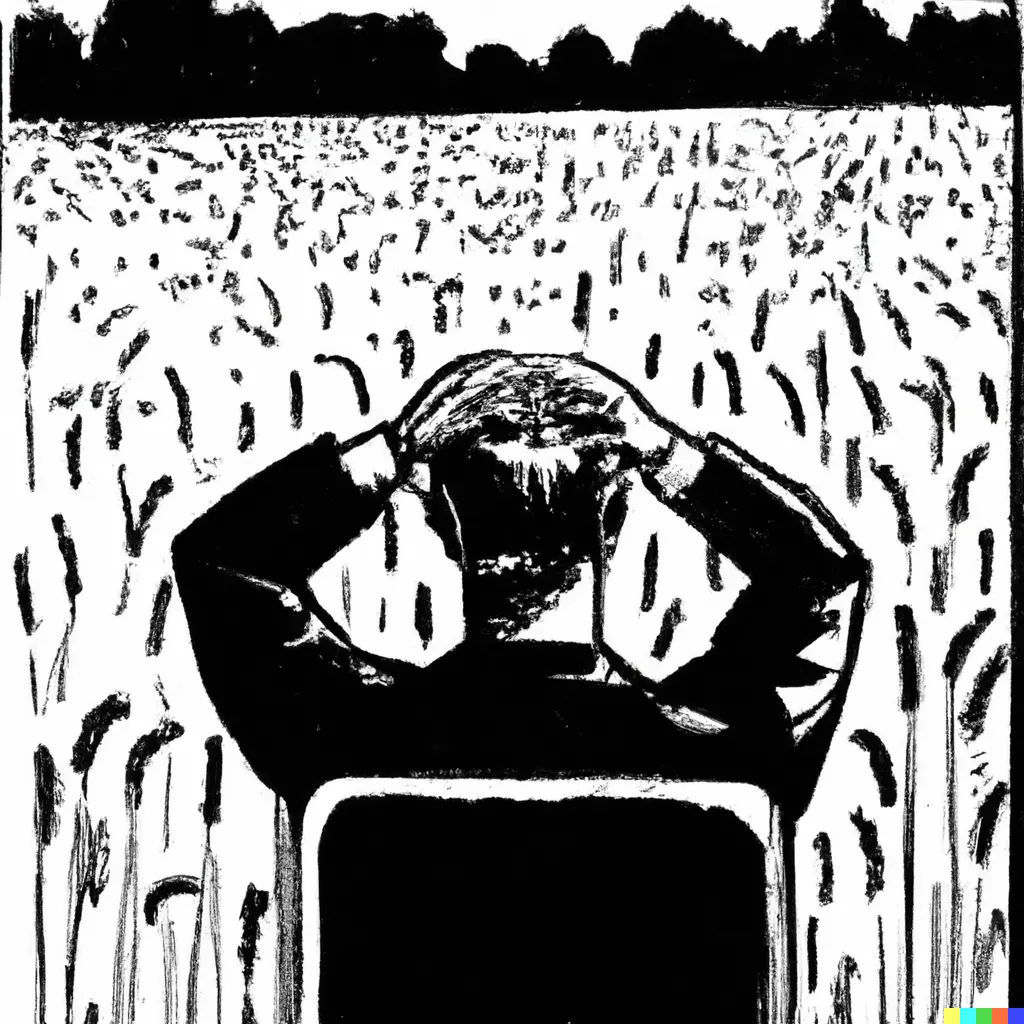
I was recently granted early access to DALL-E 2, proclaimed on the OpenAI website as the “New AI system that can create realistic images and art from a description in natural language”.
I have watched enough episodes of Black Mirror to know where this might lead, and I know that there are some meaty ethical issues to consider too, but my 21st-century teacher brain, habituated to the motion of underthinking the eventual impact of blind acceptance of interesting new technology, fizzed with surreal and abstract textual prompts.
I should have started by reading the official prompt book
The longest running radio show in the UK is Just a Minute. The premise is that players must speak for one minute on any subject asked of them without hesitation, repetition or deviation. I dived into DALL-E in the same manner, with a full unmediated stream of consciousness:
“A teacher sitting on an infectious disease wearing a face mask surrounded by inspectors”
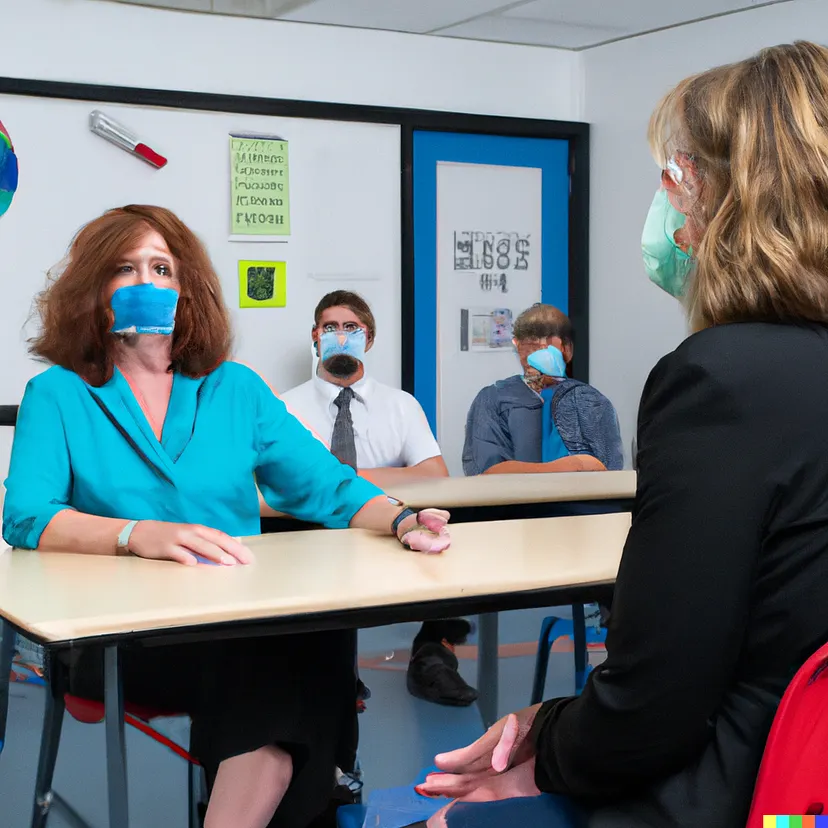
Creating this first terrifying and hilarious image taught me two things: firstly, actual effort would be required to get decent results; secondly, thinking of a prompt in this seemingly random way could inadvertently be very revealing of my unconscious mind. It’s a bit like a reverse Rorschach test. The what? You know — the inkblot test. That one you are thinking of right now. With the ink. C’mon, you know! Ah, blow it — I can show you with DALL-E:
“Frustrated teacher Rorschach inkblot”
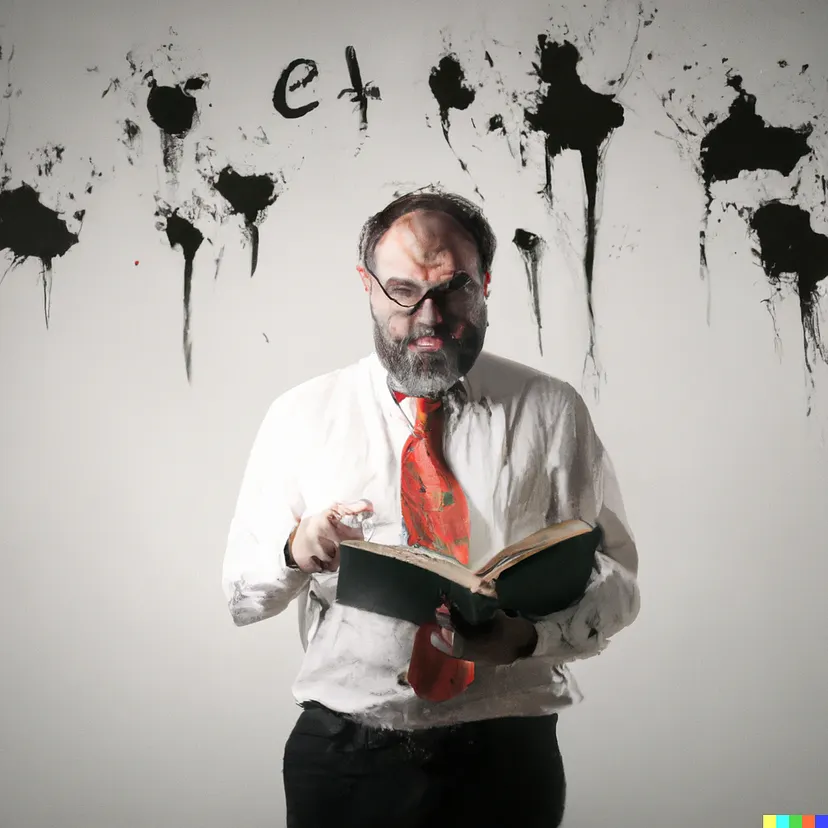
With the classic Rorschach test, you describe what you see in abstract inkblots and in the process provide insights into your personality and emotional state that would otherwise be hidden in your unconscious mind. DALL-E is the other way round — you betray your inner thoughts with the slip of an adjective and then out pops an abstract representation which evokes a feeling you didn’t realise you were experiencing until that point.
After waste-prompting away a few of my 50 free DALL-E credits, I turned to the official prompt book which teaches you how to get the most out of the tool to manipulate ‘aesthetics, vibes, emotional prompt language, photography, film styles, illustration styles, art history, 3D art, prompt engineering, outpainting, inpainting, editing, variations, creating landscape and portrait images in DALL-E’.
Noun phrases with style
I resumed my prompting with simple noun phrases built around the word ‘teacher’ and appended a style. It was supposed to be a bit of fun but the first images hit hard:
“Stressed teacher in a field linocut”
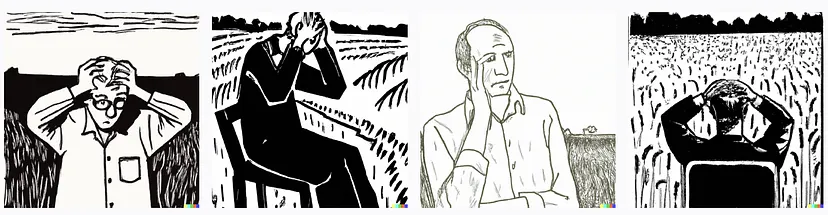
The emotion conveyed in the four variations spat out by DALL-E seem very familiar. Is that me? Is that how I feel?
Why was my first adjective of choice ‘stressed’, and, perhaps harder to explain, why in a field? It is currently late August. In the UK this means just a week or so left of holidays. I should probably be spending more time getting ready for the new term, right? The aura of my ‘teacher’ identity often appears at inopportune moments, and would be fully capable of ruining a good walk in the countryside if I let it.
What if I change the style to an artist I like?
“Stressed teacher in the style of Keith Haring”
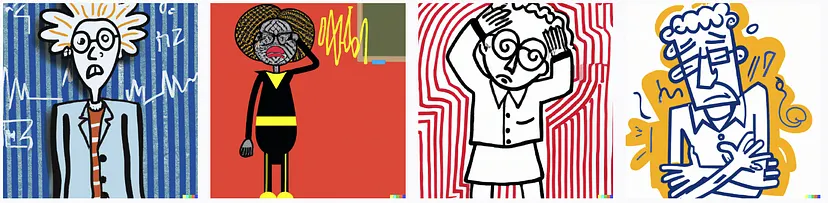
No. Somehow this is still me. I don’t like it. Let’s shake it up a bit by shifting genres.
“An exhausted teacher, by Katsushika Hokusai”
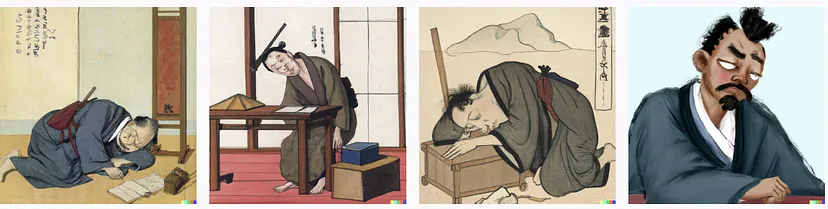
Well, that is definitely not me. But I know what he is going through! Perhaps, if I change the subject I won’t see myself reflected in the image:
“A politician in a classroom in the style of antique grunge”
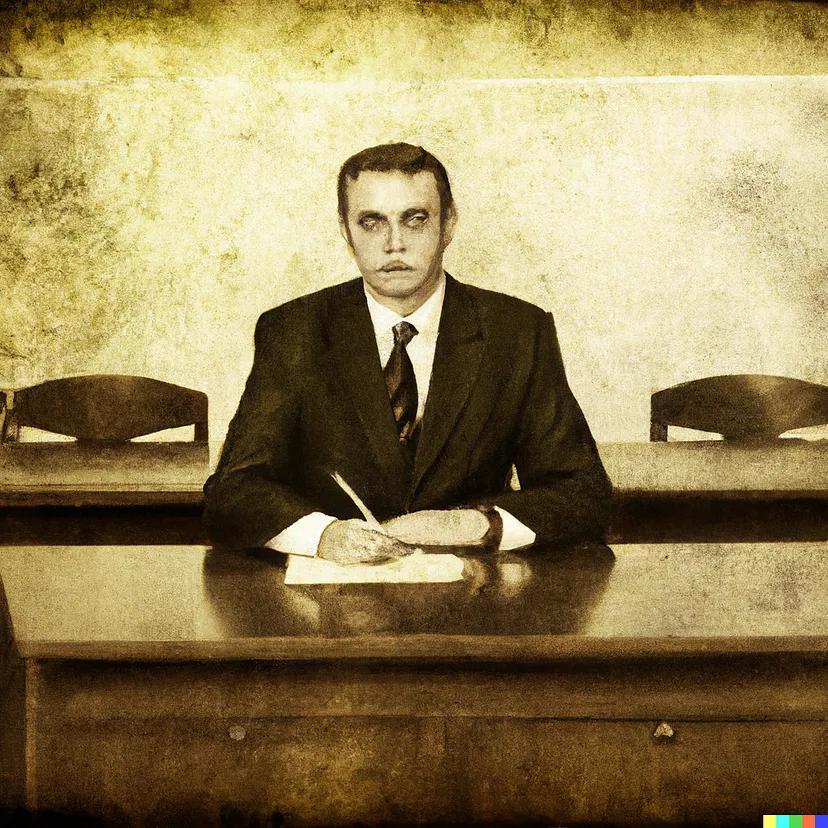
That’s not me either, but an ever present figure in my lessons. The antique grunge style takes me to an old era of psychiatry and psychoanalysis, and if teachers share any kind of collective unconsciousness the man above personifies an Inspector archetype.
“A nervous teacher, by Kandinsky”
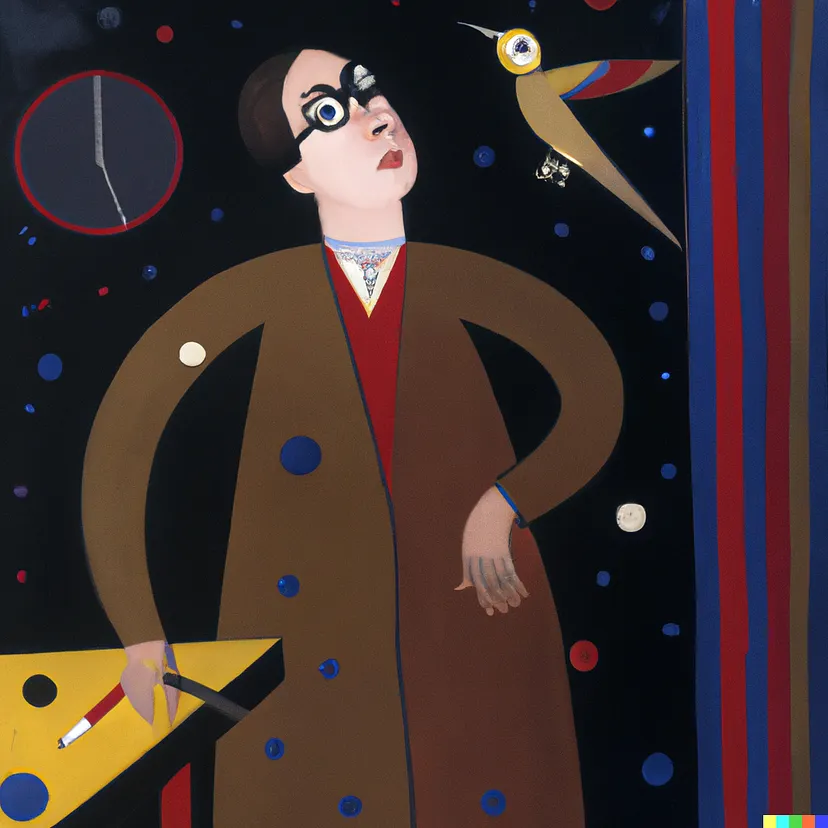
Artificial appropriation
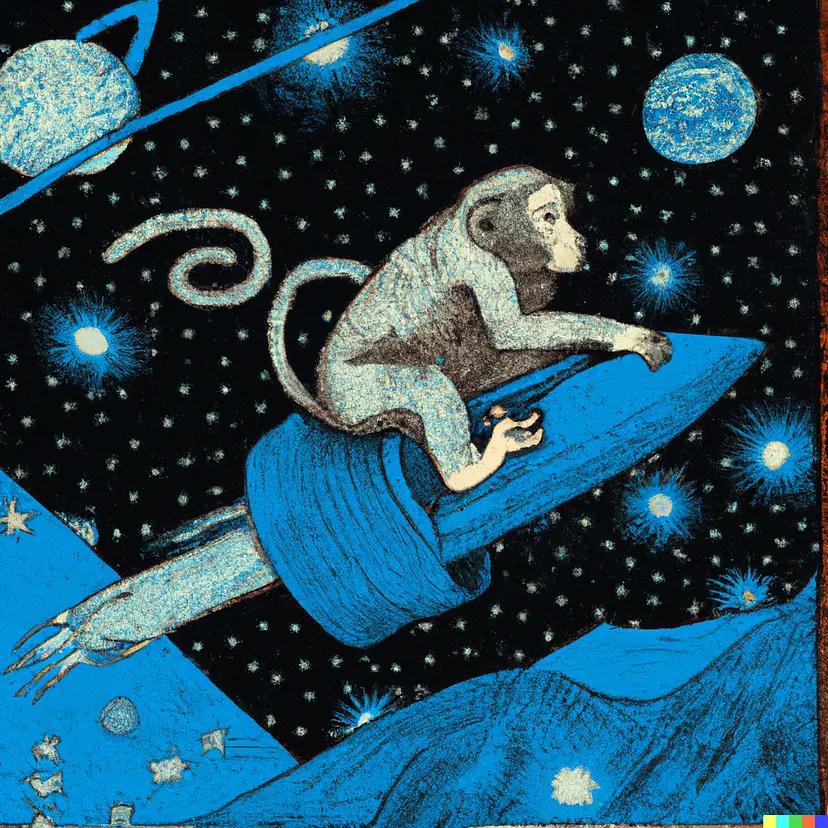
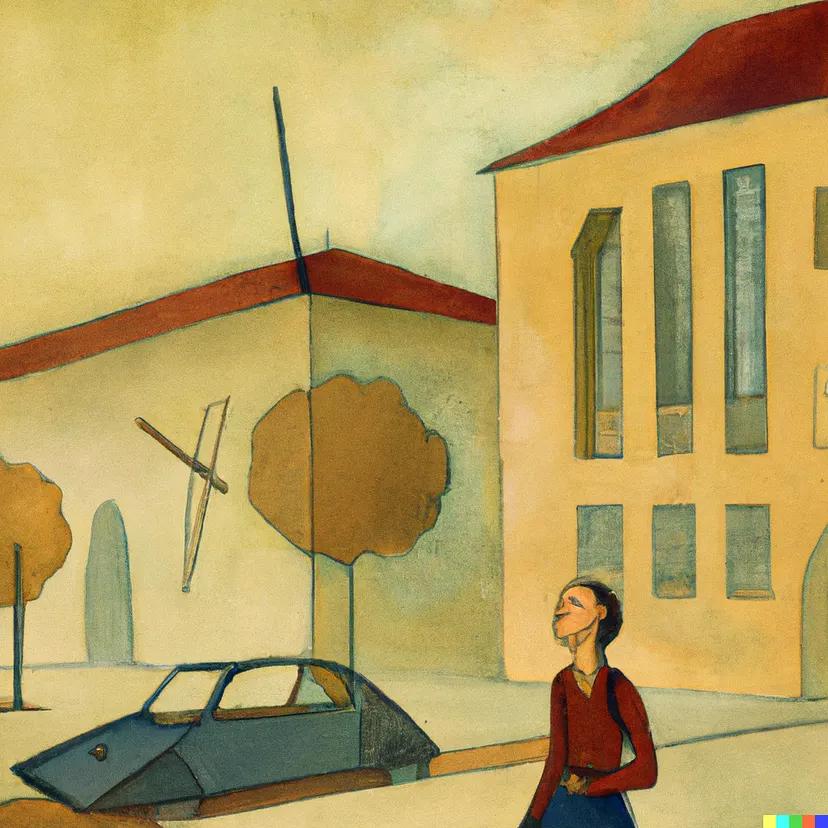
Adding ‘by artist’ to a prompt asks DALL-E to adopt the style of a known artist, often giving playful results, especially when suggesting anachronisms:
“Monkey in outer space riding on top of a space ship, by Katsushika Hokusai”
“A student in a Tesla in front of a school building, by Paul Klee”
“Sonic the Hedgehog by Van Gogh”
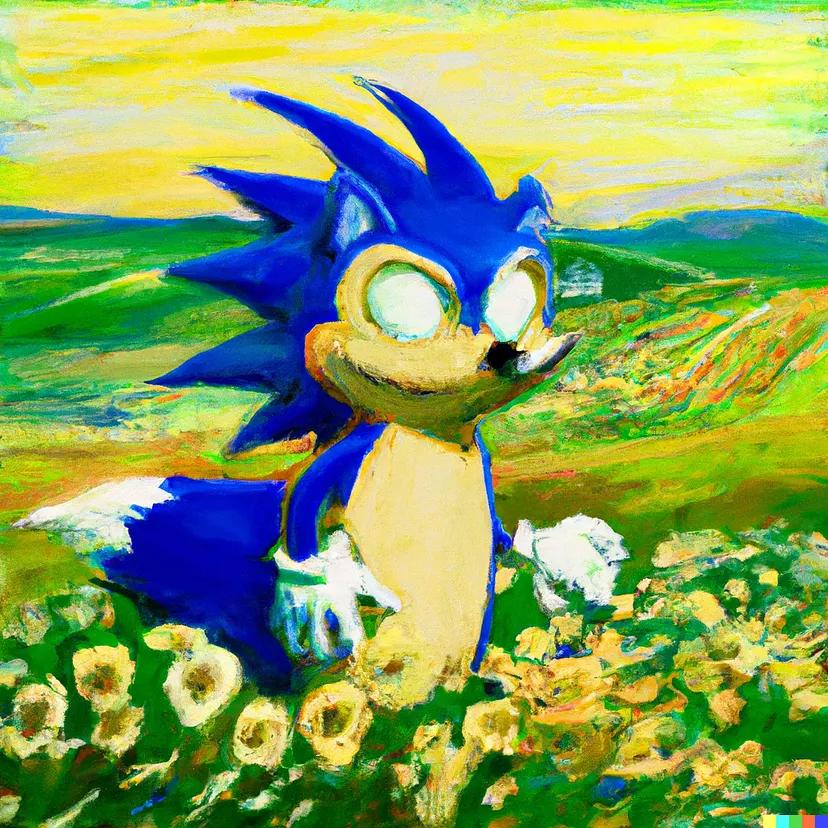
These results are somewhat hit and miss and obviously wouldn’t fool anyone. However, when my prompting turned to Shaun Tan, beloved author and illustrator of The Arrival and Tales from Outer Suburbia, two emotive graphic novels often studied in primary schools, I was struck by the authenticity of the artificially generated images. If you squint a bit, that is.
“A boy on a bicycle by Shaun Tan”
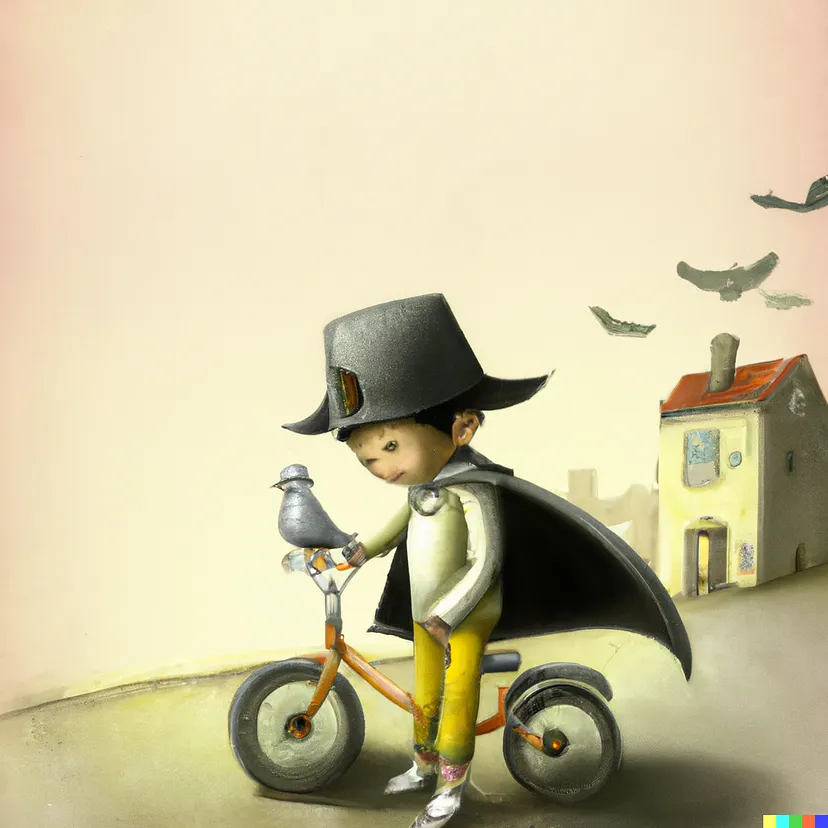
Shaun Tan ’s style is surreal and often weaves a social commentary into the narrative beyond what you might expect from a picture book. Kandinsky, Klee, Hokusai are not around to comment, but Tan is. I wonder how he feels about an algorithm adopting his style? Does he find this artificial appropriation offensive or amusing, irritating or inspiring? The surreal nature of his illustrations already seem to come from machine generated randomness. Is the algorithm a threat?
Here is the cover illustration for his book Cicada, a real picture created from the mind and hand of a real human:
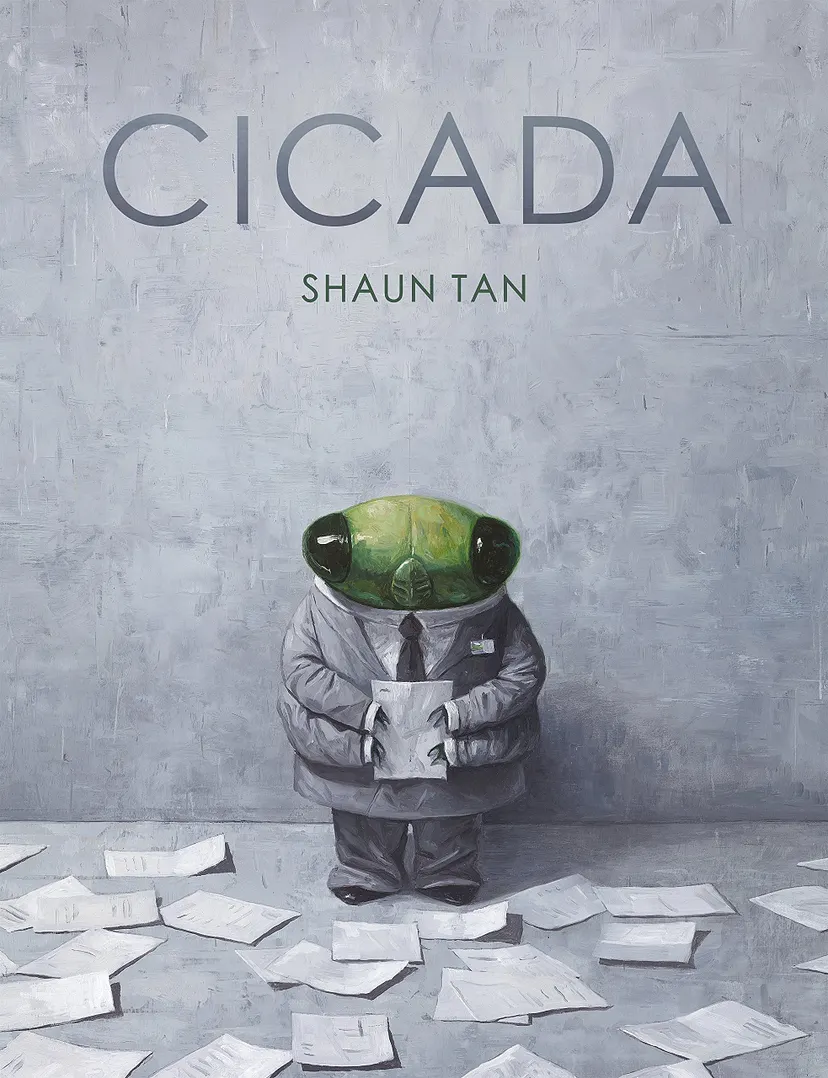
Right, beat that DALL-E 2:
“A cicada wearing a grey suit and tie holding paper on a grey background, by Shaun tan”
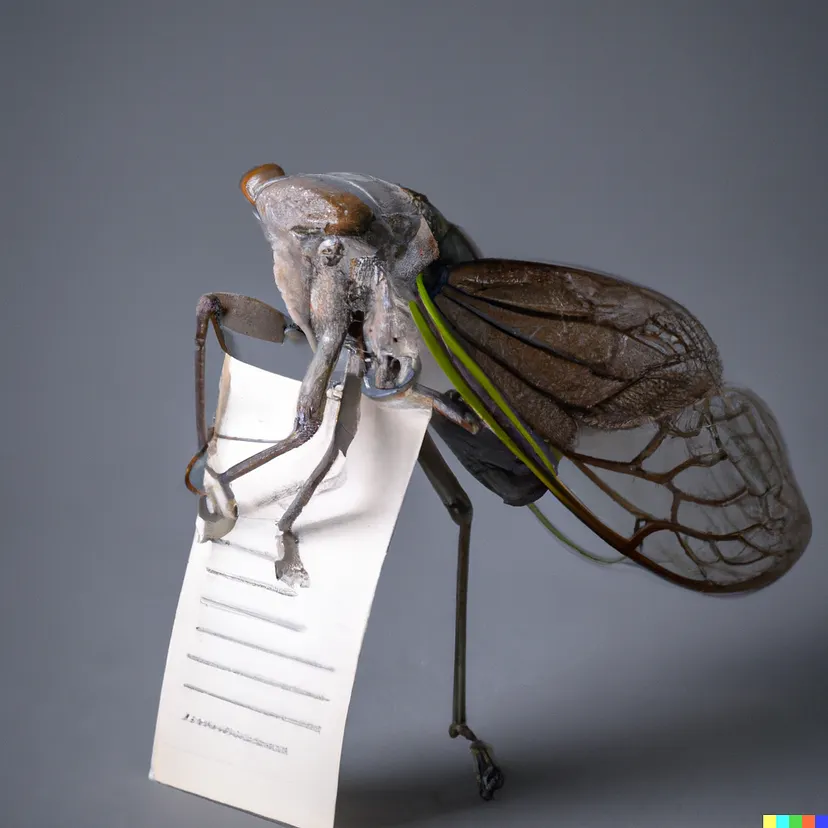
I don’t think Shaun Tan need worry.
But what about less established artists? I am a big fan of geometric and line art and follow the relatively unknown Texas based artist, Tyler Foust .
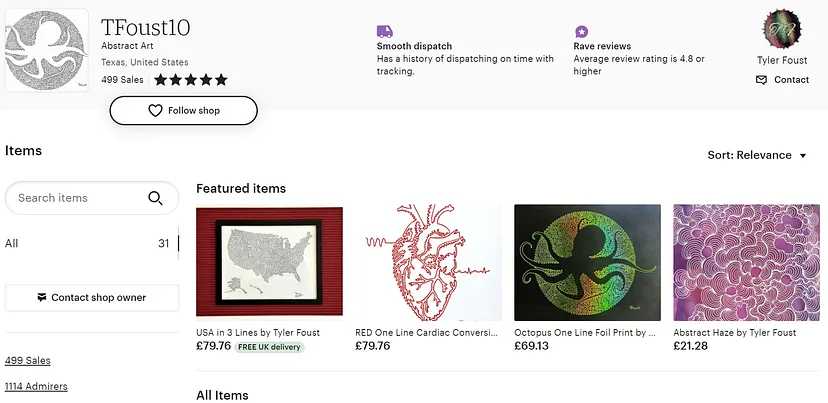
Could the algorithm whip away his style preventing him from becoming further established?
“United Kingdom outline, line art”
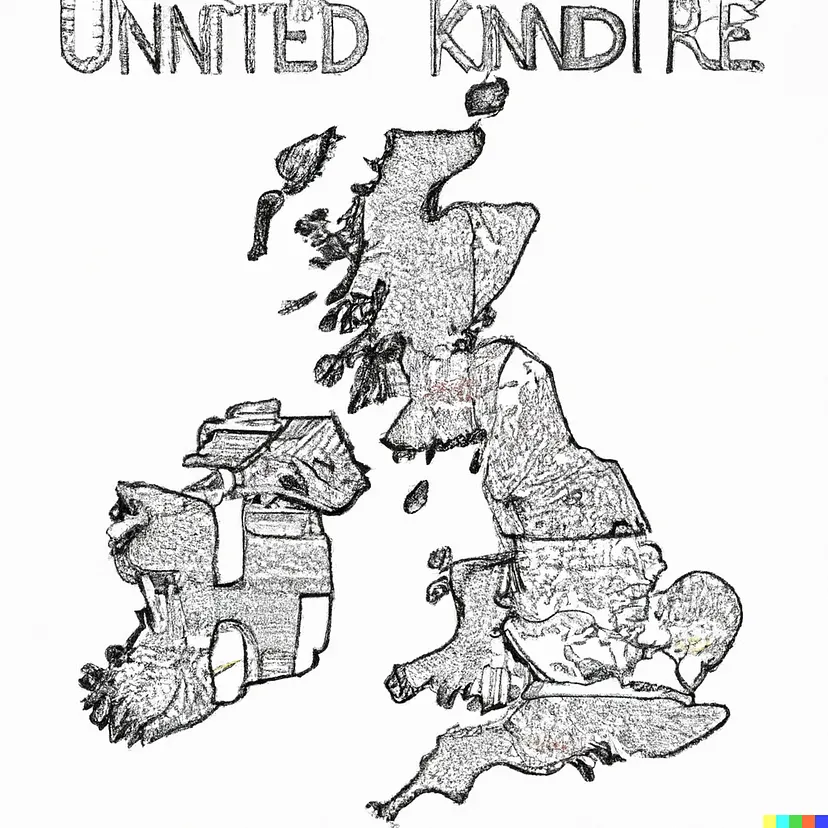
I think you are safe for now Tyler!
A classroom tool
Last year, wanting to experiment with Adobe Premiere, I combined some royalty free images and music to create a video of Robert Frost’s famous poem ‘The Road Not Taken’ . I wonder if instead I could have fed the poem line by line into DALL-E. Let’s see:
“Two roads diverging in a yellow wood, warm lighting, wide shot, outdoors, digital painting”
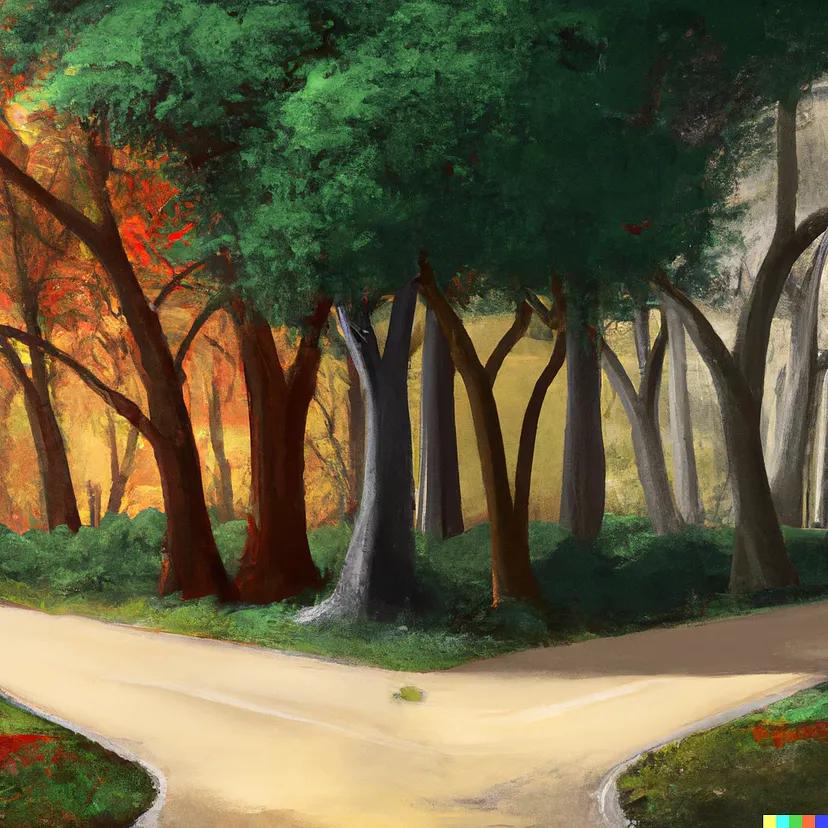
Let’s skip to the final highly misunderstood line:
“A man taking a less travelled path, golden hour, wide shot, outdoors, oil painting”
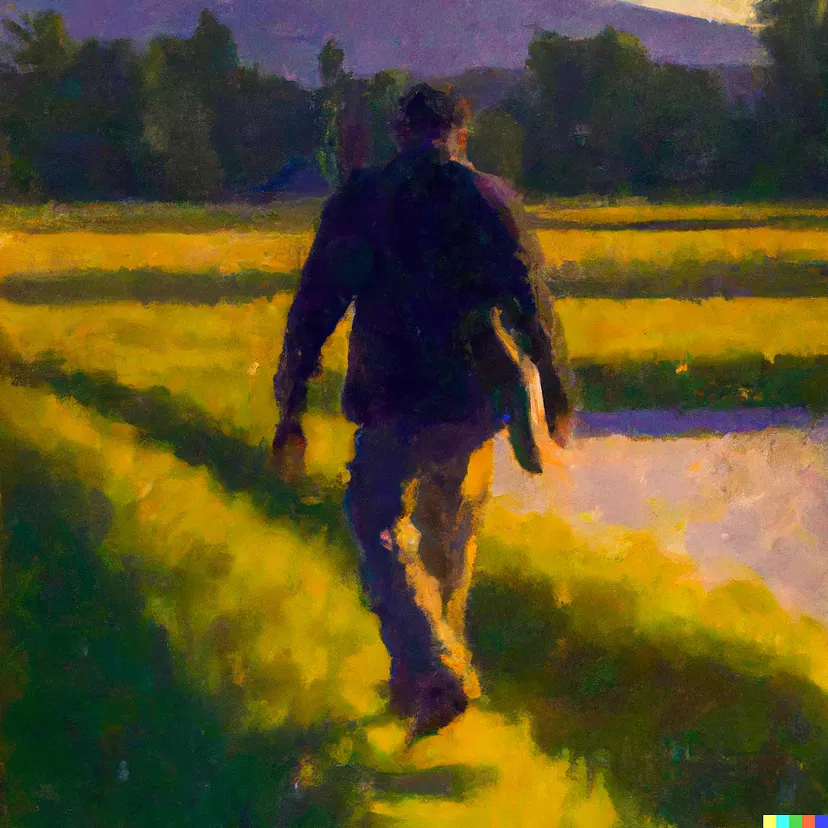
Once I stopped focussing on whether the images faithfully match the style of a particular artist, I felt much freer to enjoy the images created. For me the two images above nicely represent the feel of the poem.
I am sure DALL-E could be used in the classroom to help bring poetry and other texts to life. Let’s try another.
‘Out, Out’ also by Robert Frost almost reads like a sequence of DALL-E prompts:
“Five mountain ranges one behind the other, Under the sunset far into Vermont, golden hour, digital art”
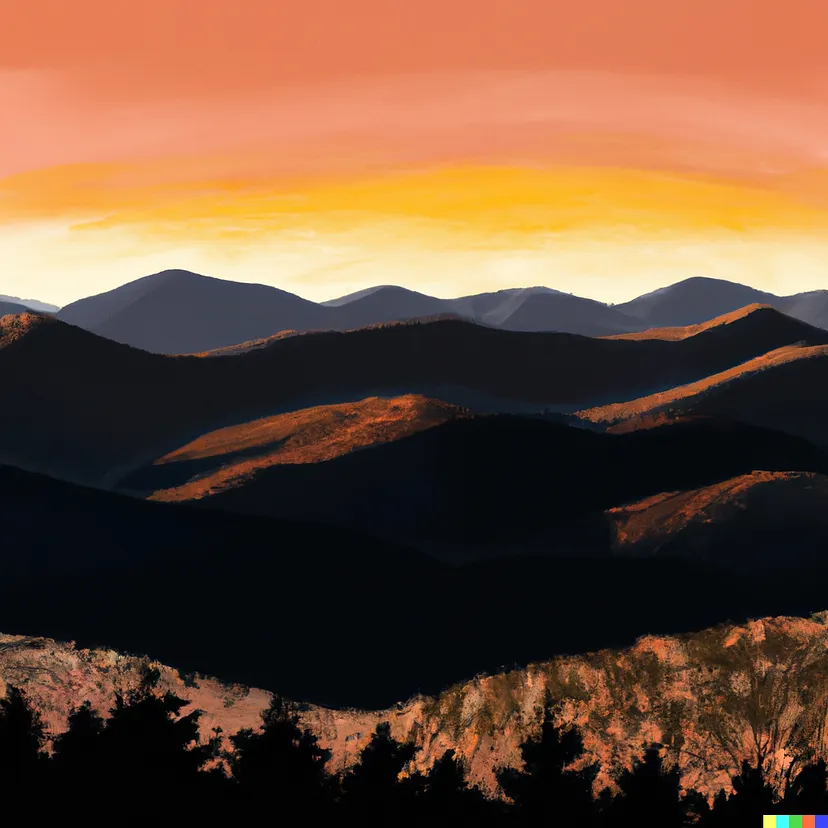
Things take a violent turn later in the poem, which Frost’s imagery hints at:
“A buzz saw snarling and rattling in a yard, scratch art, foil art, red on black”
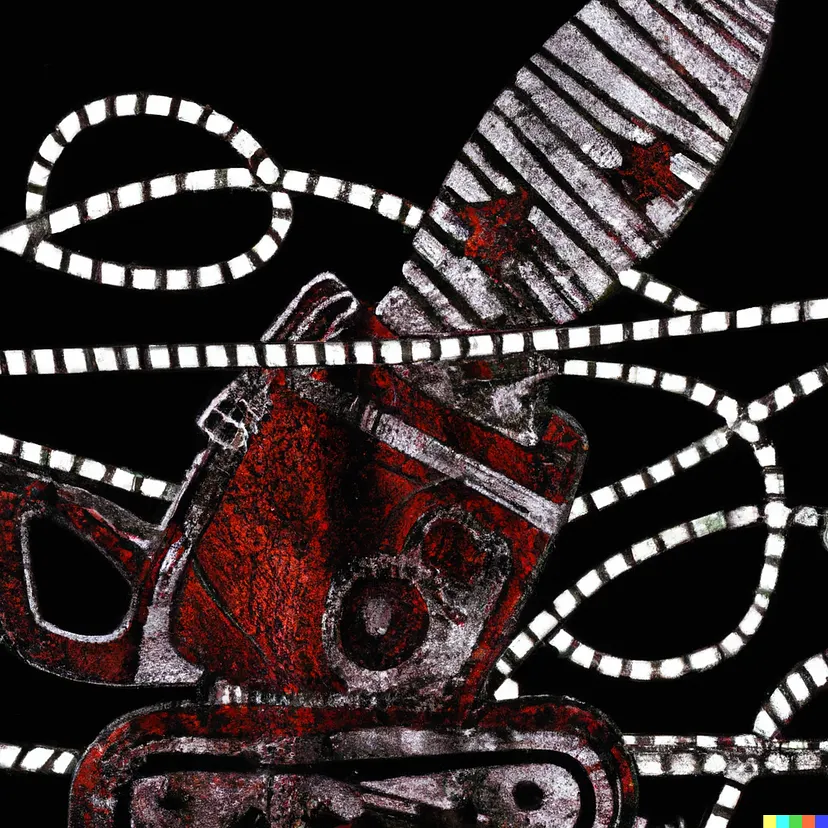
And that was as much of Robert Frost as DALL-E could take:
“Raised arm with severed hand, in a barn, gothic horror”
Robert Frost has been CENSORED!
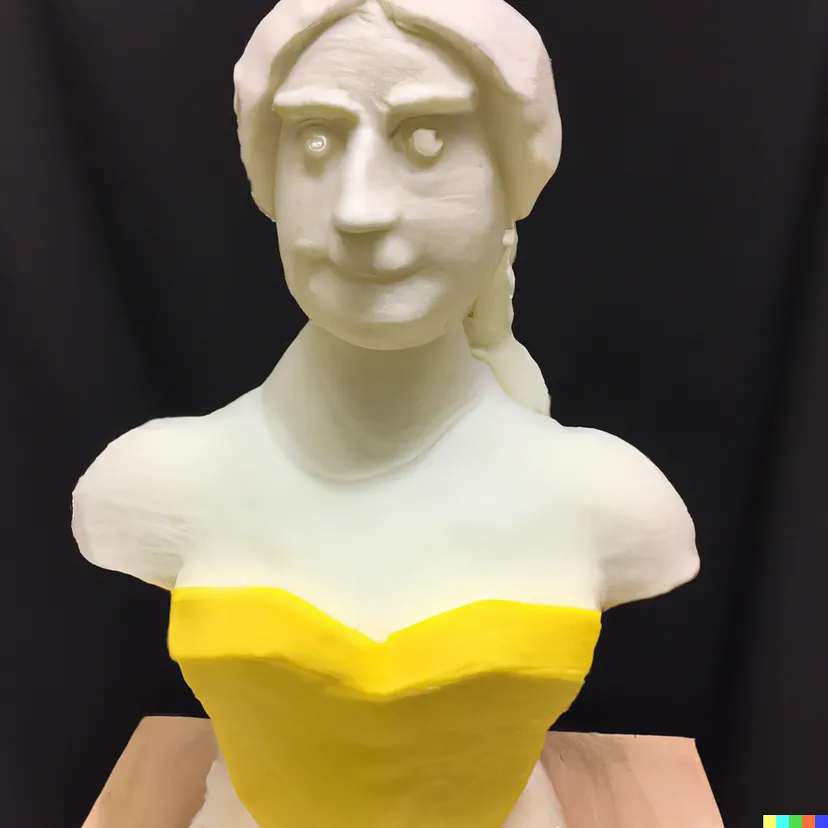
The content policy outlines several uses of DALL-E which are banned including depictions of violence. Other restrictions include not being able to upload pictures of realistic faces or images of real people, whether of the user or a public figure. You are also not permitted to ‘create content that may be used to influence the political process or to campaign’. To commiserate, here is a picture of…
“Liz Truss as a butter sculpture”
In a Facebook group for Computer Science teachers I recently saw a post from a teacher seeking help thinking of a way to relate hardware components to cooking an Indian meal:
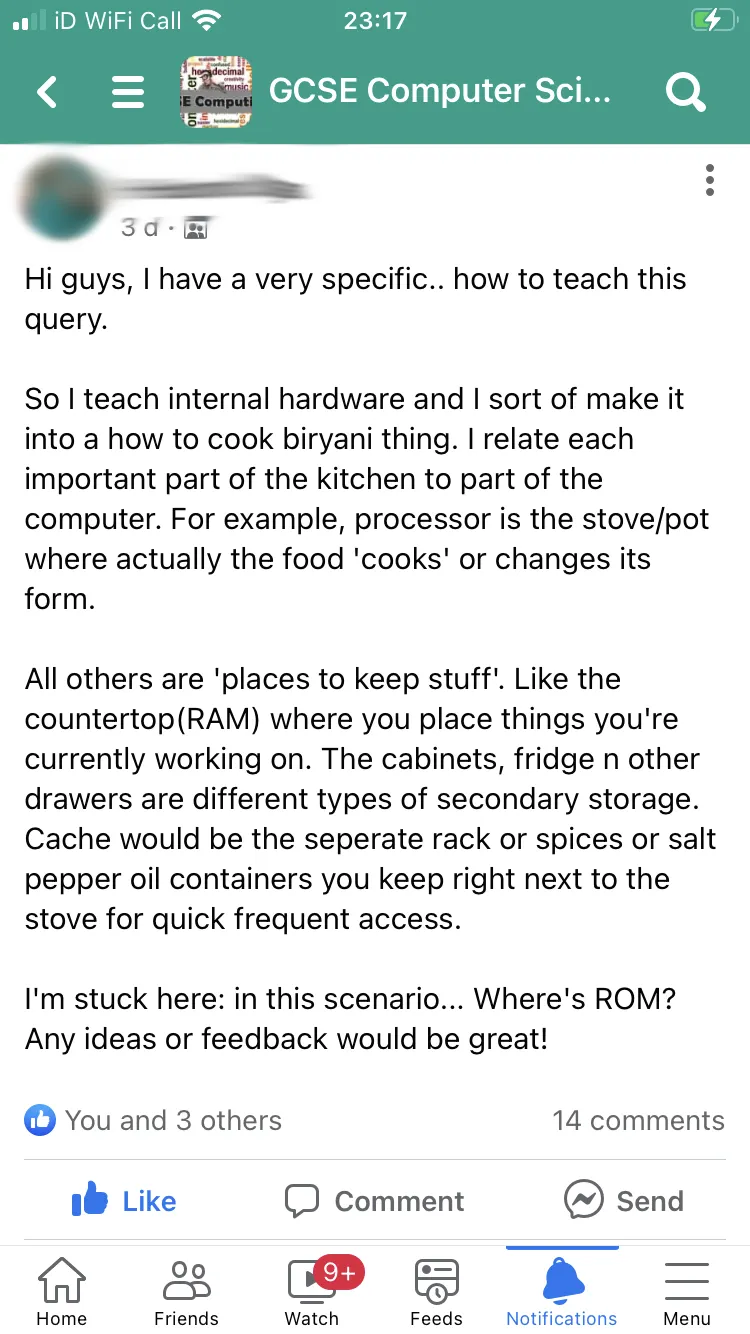
The consensus was that the ROM is the cook book itself as it contains all the instructions to get the whole process started.
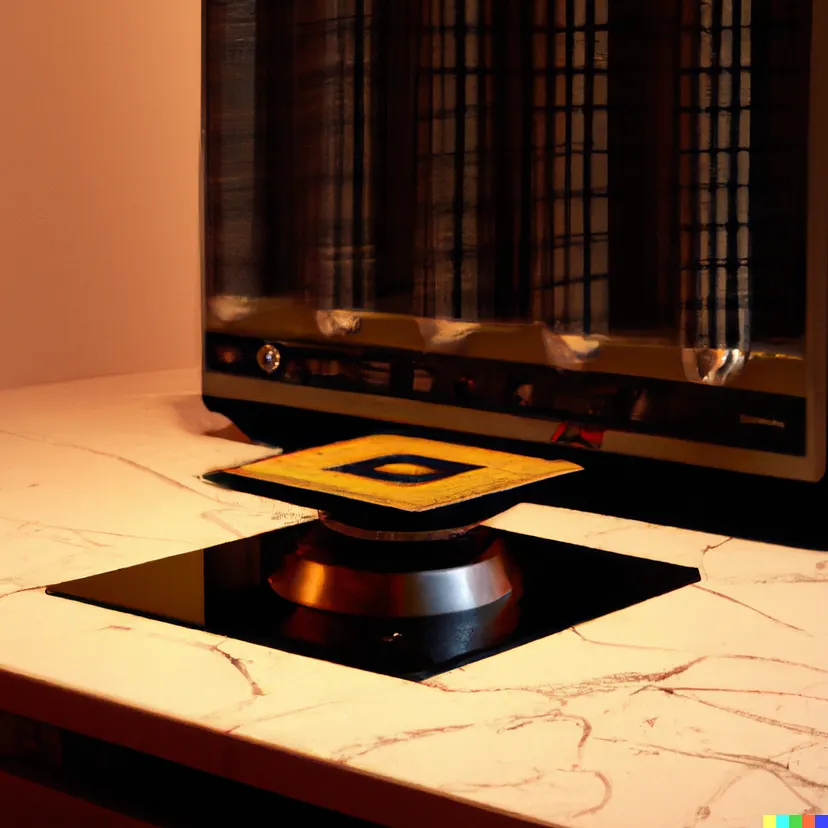
Perhaps this metaphor of an analogy of an abstract concept would benefit from some DALL-E visuals:
“A CPU on a stove, indoors, Bauhaus art”
“Hard disk drives in a brightly lit fridge, by Edward Hopper”
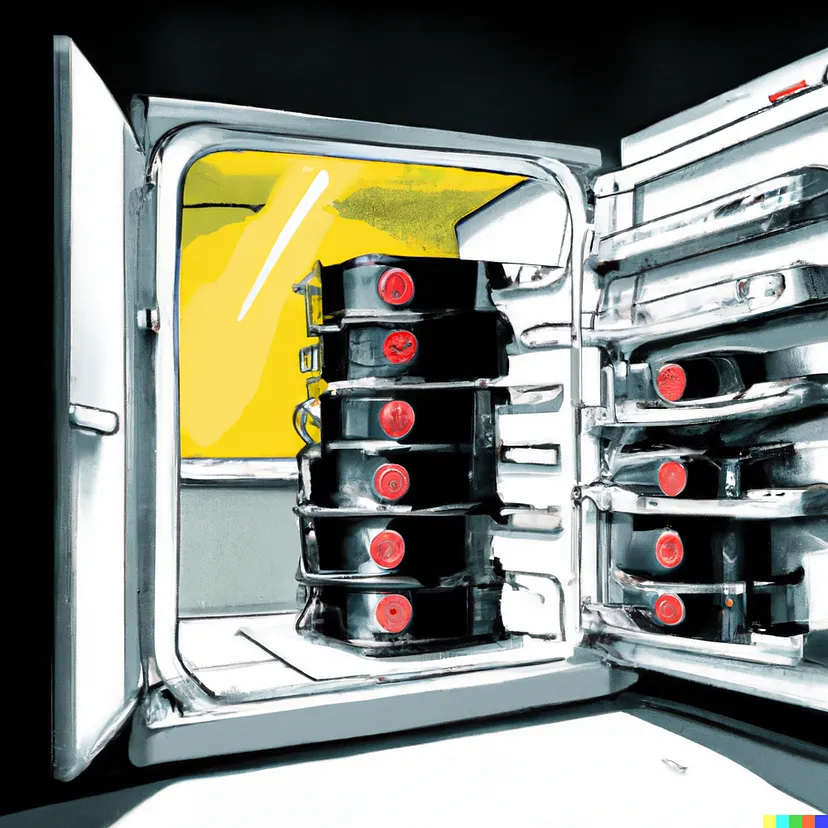
And so on.
I’m not convinced. If I created a whole series of computer hardware resources smattered with DALL-E images I would worry that when it came to answer a question about how a computer worked in an exam my students might answer “Well, first pre-heat the oven to 180°C…”
Creative projects
I think flaticon.com , which provides simple vector graphics, is far more useful for finding visual queues to help learning. However, a big bold DALL-E creation would work well as a hook or a starter, with an open question like “What could we be learning about today?”
“A plague doctor riding on a unicorn through London in the 1600s, bleak, digital painting”
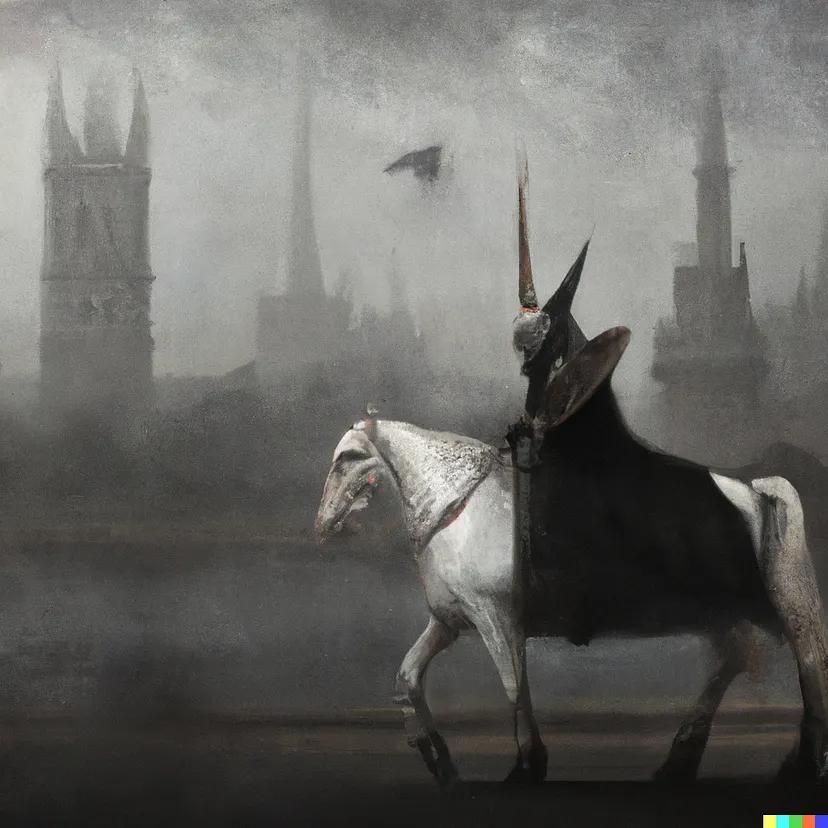
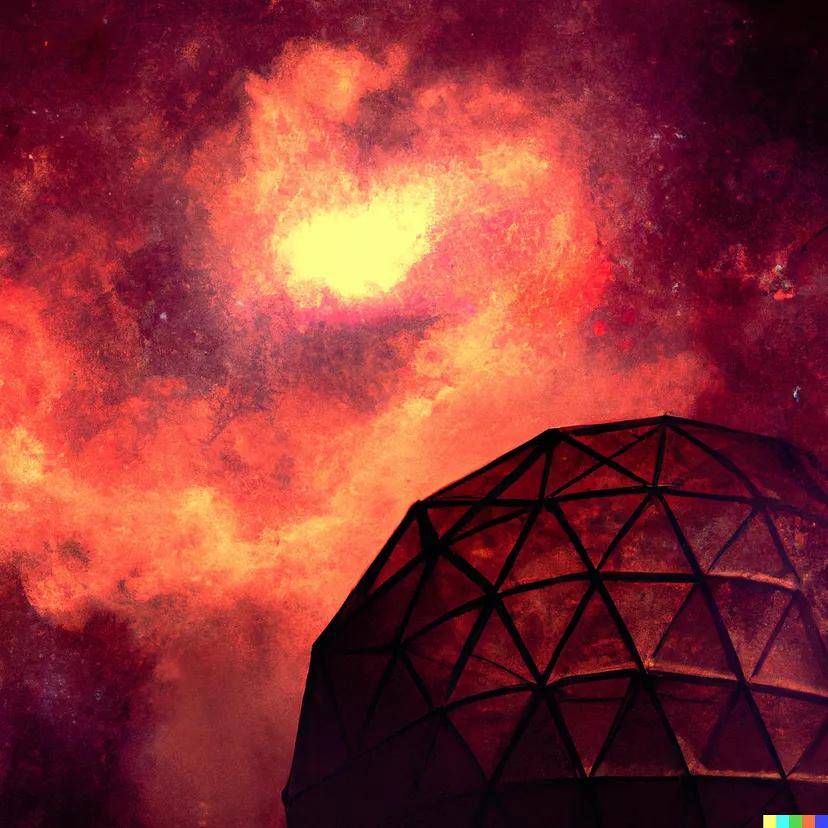
I can also see DALL-E being useful in my creative projects. For example, to create more enticing thumbnails for my YouTube videos. The thumbnail for my cardboard planetarium could be improved for instance:
“A geodesic dome in front of an exploding nebula, red scale photography”
What next?
Where are we going with this technology? Maybe the process will become as unremarkable as a Google image search, or the web might become so saturated with DALL-E images that we all get AI fatigue. However, at the moment I’m getting a thrill from creating striking images and pretending I could really create such works!